|
|

 |
M777 155mm Howitzer
Spalah Models
Reviewed by Zack Sex
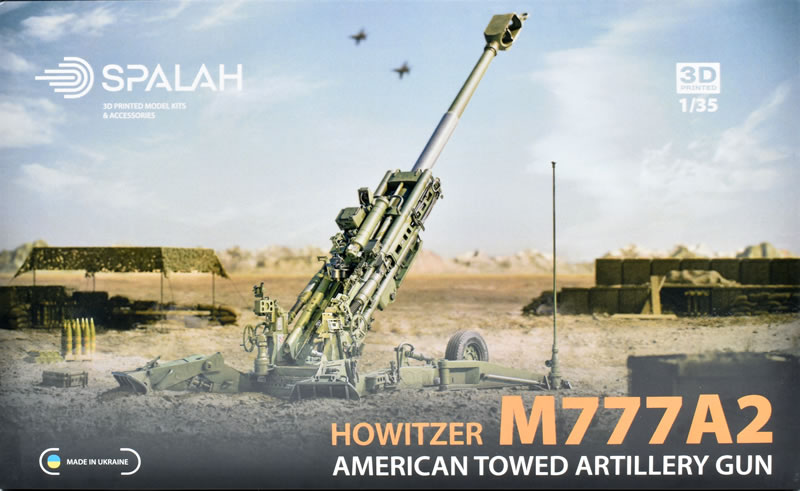

USD$150.00 plus shipping available online from Spalah Models
B a c k g r o u n d
Originally developed by the Vickers Armaments Division in Barrow-in-Furness, Britain, the M777 began life as the Ultralight Field Howitzer (UFH) project in 1987. Following the absorption of Vickers into BAE Systems, the design became substantially Americanised, with around 70 per cent of construction and assembly undertaken by a network of BAE Systems' US subcontractors.
The M777 was not only lightweight, thanks to its extensive use of titanium structures and recoil components, but it was also designed for strategic mobility. It could be transported by helicopter as an underslung load or carried aboard aircraft such as the C-130 Hercules and C-5 Galaxy. Like the Soviet D-30, the M777 features a towing eye attached to the muzzle brake, facilitating rapid deployment, towing and repositioning.
The M777A1 and A2 variants employ digital fire-control systems similar to those used by the M109A6. Combined with the M982 Excalibur 155mm GPS-guided projectile, the system is capable of delivering highly accurate fire at ranges of up to 40 kilometres. All in all, it represented a major advance over traditional NATO towed artillery.
The M777 achieved considerable export success, serving with the US Army (391 units), US Marine Corps (481 units) and National Guard (518 units), while also being exported to Australia, Canada, Colombia, India, Saudi Arabia and Ukraine.
The M777 was at the forefront of the United States' "War on Terror", seeing extensive service in Afghanistan, Iraq and Syria, where it conducted strikes against Taliban and ISIL forces. Saudi Arabia has also employed the M777 against Houthi forces during its intervention in Yemen.
Ukraine Action and International Service
It is in Ukraine, however, that the M777 has been most thoroughly tested in a modern peer-to-peer conflict. Following the disastrous opening stages of Russia's so-called "Special Military Operation", both sides increasingly relied on artillery, missile and drone warfare. Ukraine rapidly absorbed large numbers of Western artillery systems, many of them self-propelled platforms such as the PzH 2000, M109 and Caesar.
The M777 was supplied by the United States, Canada and Australia, with approximately 152 guns delivered, including around 140 from US Marine Corps stocks. Operating close to the front line and within range of Russian counter-battery radars, Lancet drones, artillery and multiple rocket launch systems (MRLS), a significant number of Ukrainian M777s were damaged or destroyed. Nevertheless, the damage inflicted on Russian high-value targets was remarkable. One Ukrainian-operated M777 reportedly engaged around 200 Russian targets in a period of only six weeks.
Although the M777's lack of mobility may have contributed to some successful Russian counter-battery strikes, Ukrainian crews also became suspicious of the digital fire-control system. Some believed that GPS-linked components within the system could potentially assist Russian electronic warfare units in locating gun positions. Whatever the reality, Ukrainian forces replaced the original system with their own artillery software, which operates outside that particular electronic network.
Large numbers of wooden and metal M777 decoys have also been deployed along the front to distract and deceive Russian drone operators.
The importance of the M777 to Ukraine is perhaps best illustrated by the extensive repair work undertaken on damaged guns. Ukrainian maintenance crews have learned how to weld titanium—an especially challenging material to work with—and it is not uncommon to see repaired M777s returned to service after sustaining significant combat damage on multiple occasions.
Spalah Models’ 1:35 M777 Kit
With no injection-moulded 1:35 scale M777 previously available, and with 3D-printing companies popping up around the world, it was perhaps inevitable that a Ukrainian manufacturer would take on the challenge of reproducing this complex and highly relevant weapon system. Spalah Models did exactly that, stepping into the breach to fill a significant gap in the market.
Having previously built Spalah Models' MT-12 Rapira, which proved to be an excellent kit, I approached their M777 with considerable enthusiasm.
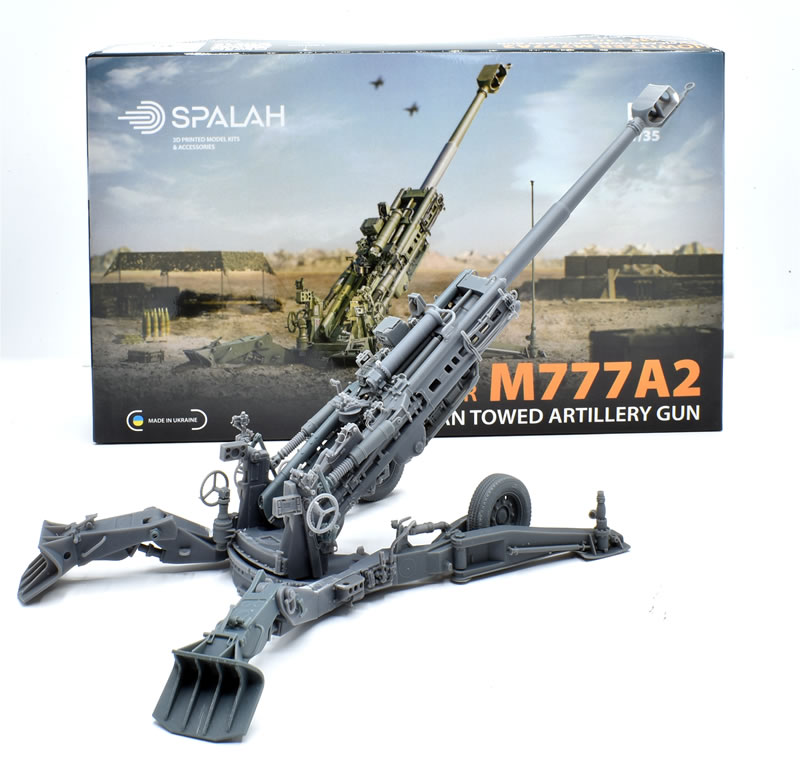
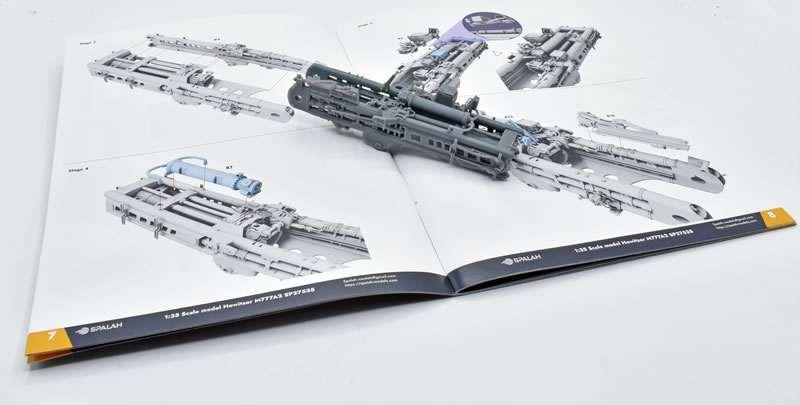
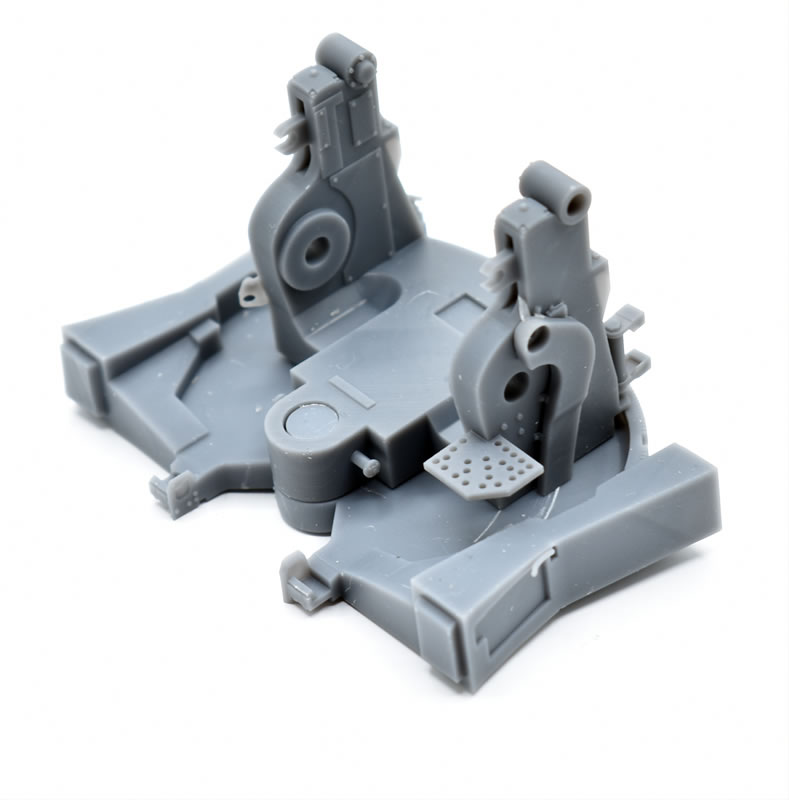
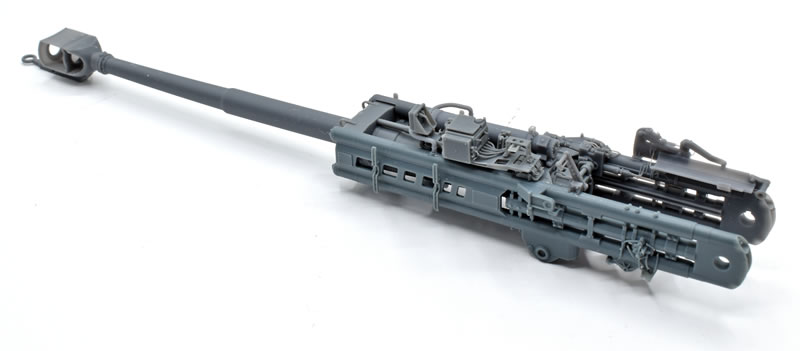
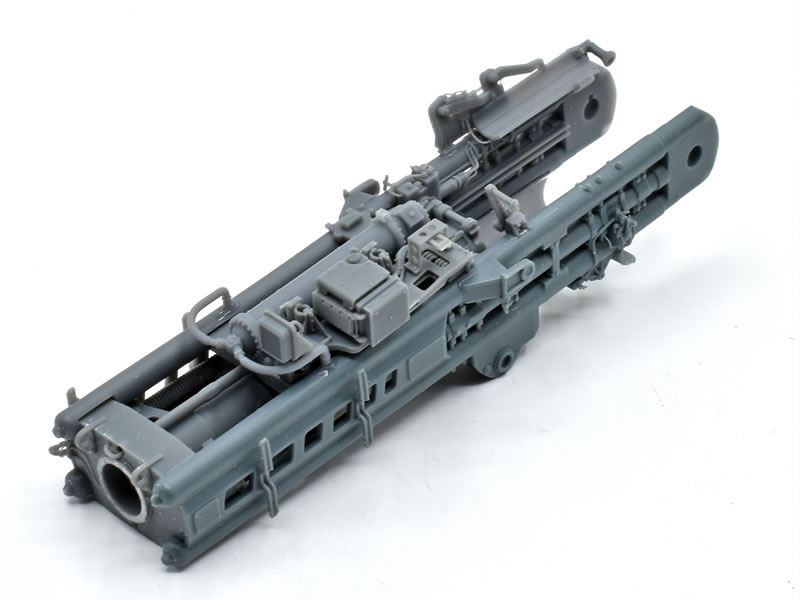
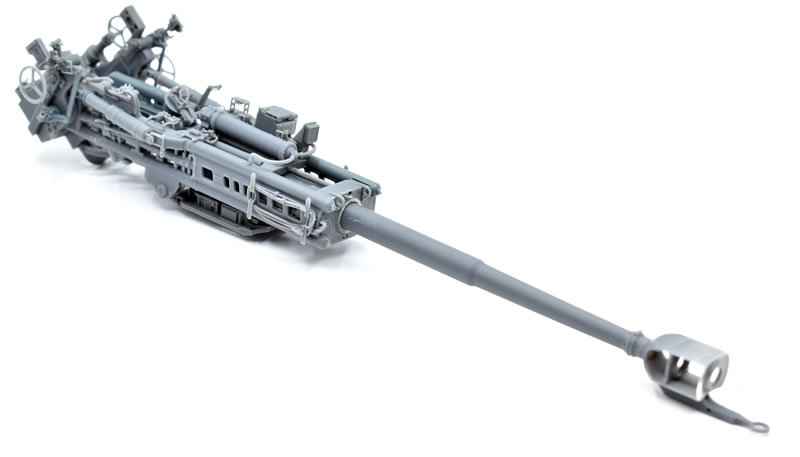
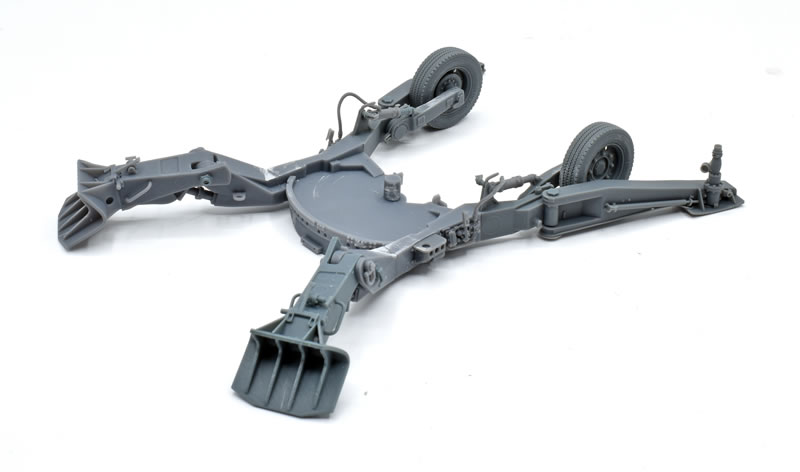
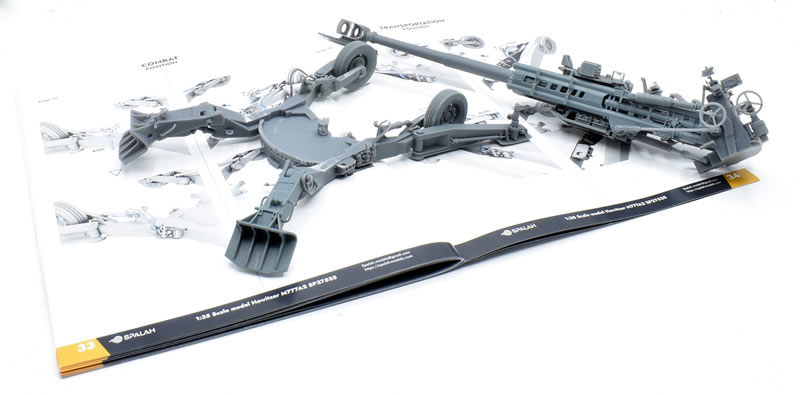

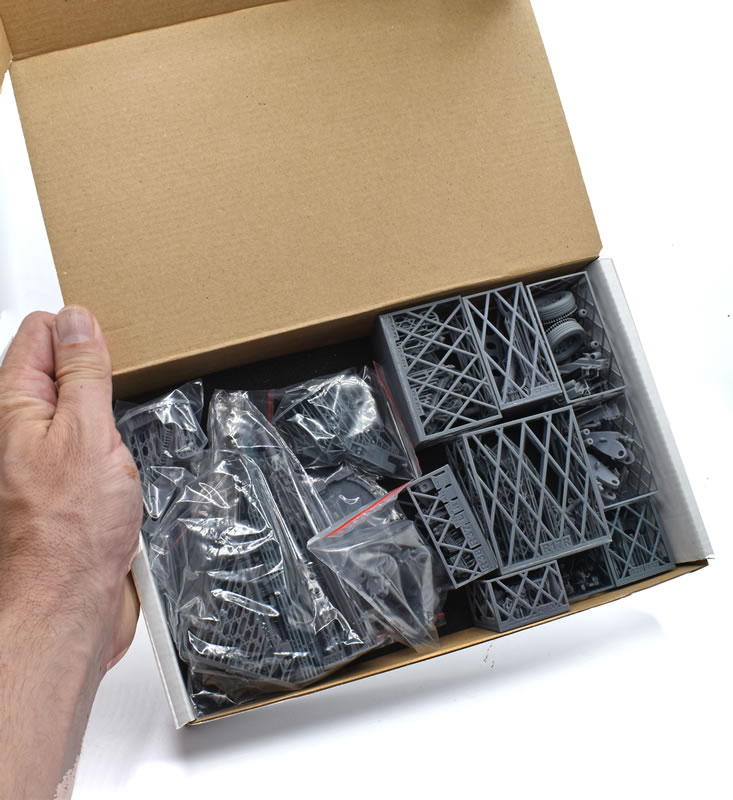
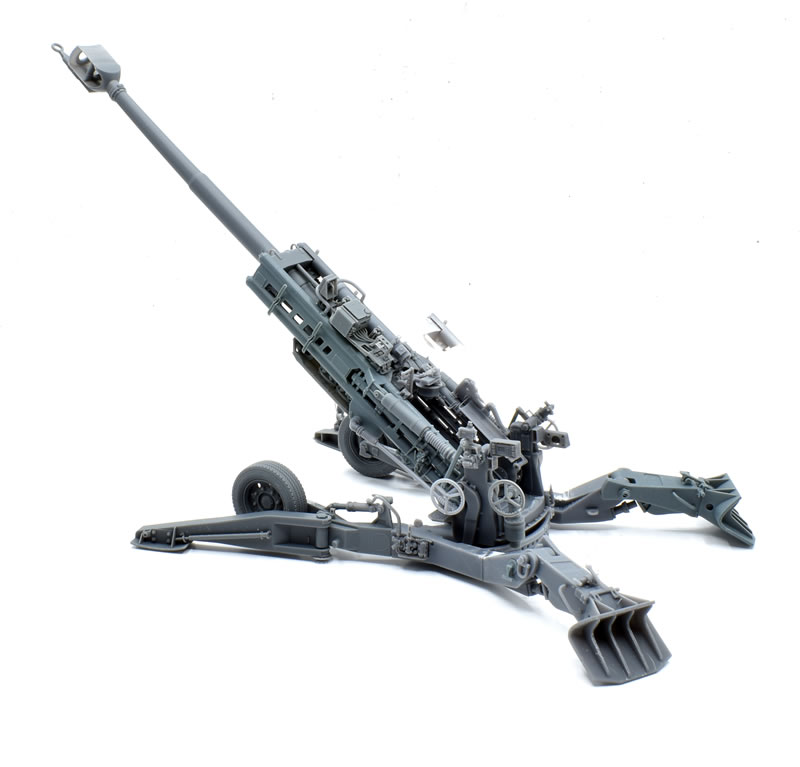
The first thing that should be noted is the outstanding instruction booklet. It guides the modeller clearly through every stage of construction and leaves very little room for confusion. Cleanup is minimal, consisting mainly of light sanding around the easily removed 3D-printing attachment points.
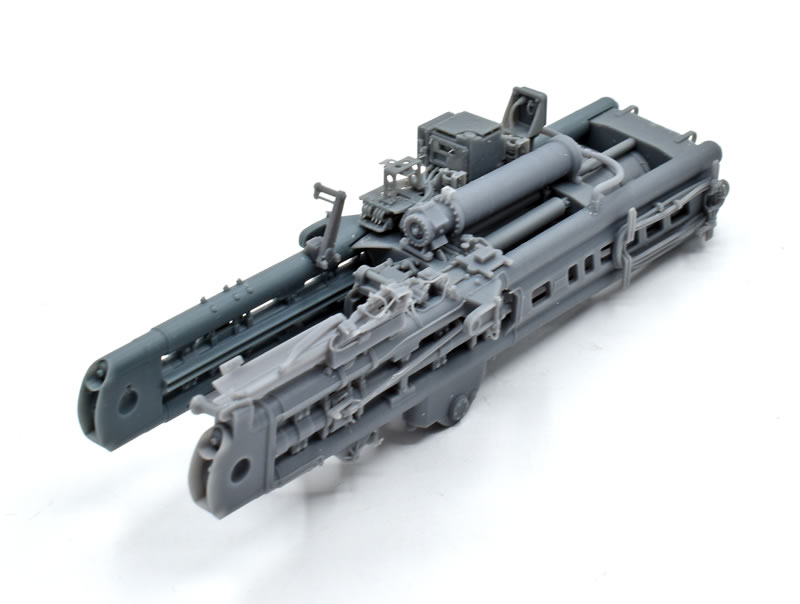
The gun and carriage are assembled through a series of logical and satisfying sub-assemblies. Some care is required when measuring and fitting the recoil tubes, but with careful dry-fitting and accurate measurement, no significant difficulties should be encountered.
After an evening or two of enjoyable construction, the modeller will be rewarded with an impressive representation of one of the most important artillery pieces of the modern era. The next question becomes what figures and display base will best complement this heavyweight addition to your 1:35 scale collection.
If you choose to depict a Ukrainian M777, Spalah Models also offers a range of Ukrainian artillery crew figures originally designed for the MT-12 Rapira. With only minor modifications, these figures would be perfectly suitable for the M777.
Zack Sex
Highly Recommended
Thanks to Spalah Models for the sample www.spalah-models.com
Home
 Discussion Groups
Gallery
Articles
Reviews
Discussion Groups
Gallery
Articles
Reviews
Copyright
Vendors Room
Links
Contact us
Copyright www.missing-lynx.com 2026
Text and Images by Zack Sex
Page Created 6 June, 2026
Page Last Updated
6 June, 2026